


SOLAR SUPPORT FOR RAIL SIGNAL POWER
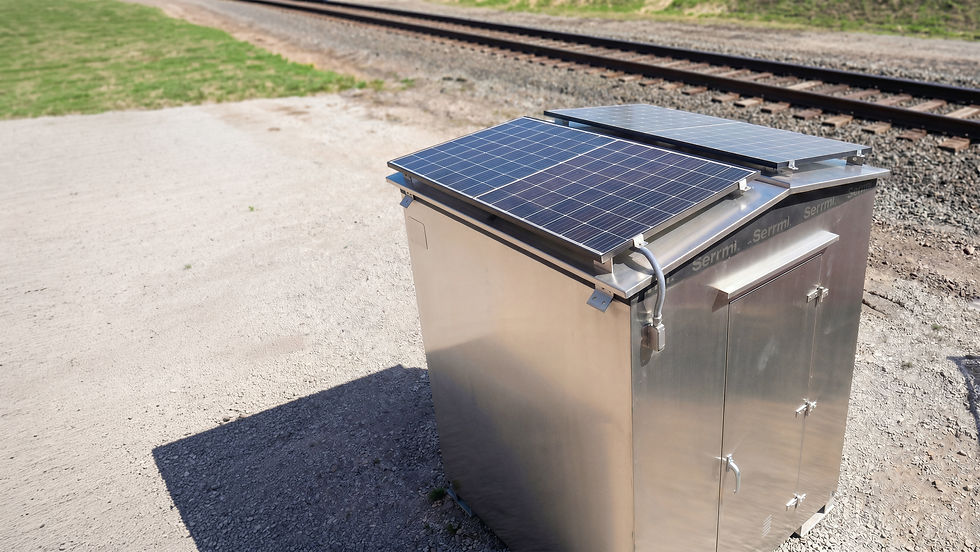
Serrmi solar-backed signal power systems add an engineered layer of power resilience to new and existing signal houses, helping rail teams reduce exposure to utility interruptions, severe weather events, remote-site access challenges, and extended outage windows. When commercial power becomes unreliable, signal houses depend on a coordinated power strategy that can preserve battery capacity, maintain auxiliary loads, and keep essential systems operating longer in the field. Serrmi integrates solar modules, MPPT charge control, DC protection, inverter support, battery connections, and AC distribution around the site’s runtime goals, equipment layout, and service requirements, delivering a cleaner and more serviceable power system for rail signal applications.
Solar-Backed Base System
The base system is designed around a standard 6’ x 6’ signal house and can include roof-mounted solar modules, a charge controller, batteries, inverter support, and an AC panel. This gives customers a repeatable solar-backed design that can be used across locations while still allowing adjustments for site-specific runtime needs.
Defined Solar Power Flow
Solar panels feed a dedicated charge controller, which manages charging for the signal house battery bank. From there, the battery bank supports DC signal loads and feeds the inverter for auxiliary AC power inside the house, creating a defined power path that is easier to understand, service, and troubleshoot.
DC Power & Protection
Serrmi's solar systems include a central DC disconnect and combiner point, terminations for battery bank and solar input, breaker protection for key DC circuits, and clear labeling for safe service. These details help crews identify circuits, isolate power, and troubleshoot the system more efficiently in the field.
Mounting & Site Options
Standard roof-mounted designs can include two modules totaling approximately 800 to 880 watts, with flush or tilt-leg mounting at 10° or 15°. For sites where roof space, sun angle, snow, glare, or orientation create challenges, optional pole-mounted arrays can support up to four modules with a 10° to 60° tilt range.


